
In memoriam · book of condolence
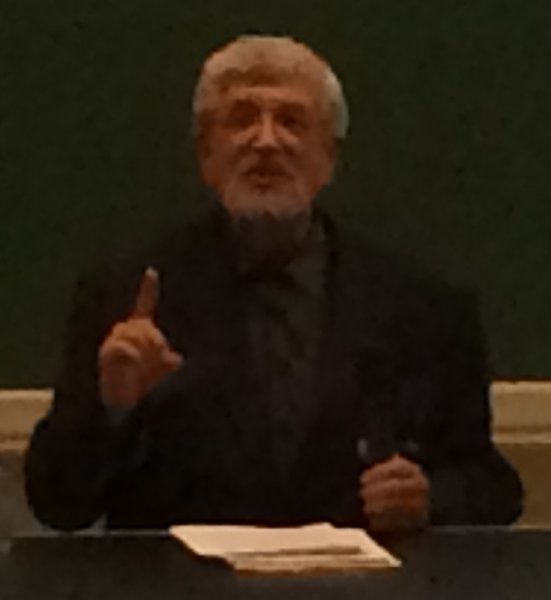
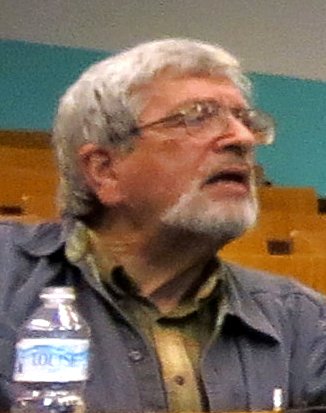
Richard Taruskin
also known as Richard Taruskin
- Born
- 2 April 1945
- Died
- 1 July 2022
- Age
- 77 years
- Resting places
- Composers & conductors Famous people, United States Countries
Biography
Richard Taruskin (April 2, 1945 – July 1, 2022) was an American musicologist and music critic. His analyses combined cultural, historical, political, and sociological perspectives with rigorous source study and sparked debate. He focused on 18th-to-21st-century Russian music but also researched 15th- and 20th-century music, analysis, modernism, musical nationalism, and performance theory. He is best known for the six-volume Oxford History of Western Music. His honors include the American Musicological Society's first Noah Greenberg Award (1978) and the Kyoto Prize in Arts and Philosophy (Music, 2017).
Life and work
Early life as a musician–scholar
Richard Filler Taruskin, born on April 2, 1945 in New York City, was raised in an intellectual family by onetime piano teacher Beatrice (née Filler) and lawyer and amateur violinist Benjamin Taruskin, with whom he enjoyed Metropolitan Opera radio broadcasts. His grandparents were Jewish immigrants from then Russia, later Lithuania and Ukraine. To play piano trios with his parents, he studied cello, including at the High School of Music & Art in Manhattan. While Italian opera and rock music bored him, Adlai Stevenson II's liberalism engaged and durably shaped him.
He received his degrees (B.A. magna cum laude, 1965; M.A., 1968; Ph.D. historical musicology, 1976) from Columbia University, where he directed the Collegium Musicum and, from the late 1970s to the late 1980s, played viola da gamba with the Aulos Ensemble. In 1978, he received the first Noah Greenberg Award from the American Musicological Society (AMS) for his research into and recorded performance of Johannes Ockeghem's Missa prolationum.
Russian music
During his Ph.D., he worked with Paul Henry Lang, a pioneer of sociocultural music history in Music in Western Civilization. Recordings of unfamiliar Russian operas from a family member who stayed behind after the Russian Revolution caught his interest, which he deepened during a Fulbright year in Moscow studying Russian language, music, and sociopolitical history. He taught at Columbia from 1975 to 1986 and received the AMS's Alfred Einstein Award in 1980.
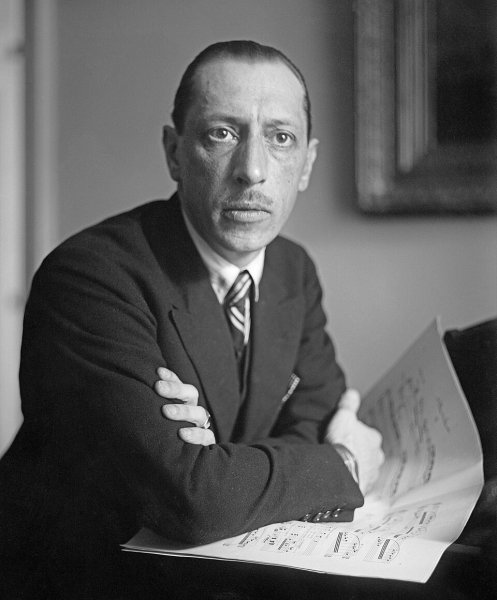
He explored Igor Stravinsky's archives at the New York Public Library in the 1980s. Following his 1981 debut, Opera and Drama in Russia as Preached and Practiced in the 1860s, he signed for a Russian opera history for Cambridge University Press, which went unfulfilled, He married Cathy Roebuck in 1984, and they had two children. Starting in the mid-1980s, he wrote for lay audiences, including The New York Times readers. The Times was where he "learned to write", he recalled, and his point of entry had been editor James R. Oestreich, initially through Opus magazine.
California
In 1986, he joined University of California, Berkeley, and was the Class of 1955 Chair. He received the Royal Musical Association's Dent Medal (1987) and the 1988 Deems Taylor Award from the American Society of Composers, Authors and Publishers.
Critical or polemical work
His sharp, often critical or polemical work, famed in and read beyond academic musicology, not only emphasized composers of Eastern European heritage, but also aimed to dispel the idea of music's sociopolitical autonomy, to challenge lore-laden progress narratives, and to historicize historicism. Many of his articles were collected in books such as Text and Act, a volume featuring his influential critique of historically informed performance, as well as On Russian Music and The Danger of Music and Other Anti-Utopian Essays. He targeted Elliott Carter, Carl Orff, and Sergei Prokofiev, and helped redeem Pyotr Ilyich Tchaikovsky.
"The Dark Side of the Moon" (The New Republic, 1988) called fascism's legacy an "inherent" facet of modernism's "anti-democratic" legacy, shown by claims of Stravinsky's sympathy for Benito Mussolini, Arnold Schoenberg's "fealty" to social stratification, and Anton Webern's welcoming the Nazis to Vienna. The reprint (Danger of Music, 2009) called fascism's legacy an "inseparable" facet of "lofty" modernism's legacy. In 2013, musicologist Ben Earle similarly called modernism "essentially anti-liberal".
"Et in Arcadia Ego; or, I Didn't Know I Was Such a Pessimist until I Wrote This Thing" (1989 lecture; Danger of Music, 2009 with comment) bucks what he saw as the standard narrative history of 19th-to-20th-century classical music: linear progress toward autonomy. It typified his quasi-straw men against lore, and he commented in 2008 that he found it "schematic and insufficiently nuanced", pointing its use as a "general framework" for his more detailed 2005 History.
"The Pastness of the Present" (1988) held that claims of direct connection to the past can mask the present. Conversely, Stravinsky and the Russian Traditions: A Biography of the Works through Mavra (1996) showed Stravinsky's extensive use of Russian folk music and the historical reasons for its lack of acknowledgment.
"No Ear for Music: The Scary Purity of John Cage" (New Republic, 1993) argued that stiff rigidity underlaid Cage's zaniness and identification with Erik Satie. In 1997, he received the AMS's Otto Kinkeldey Award and was elected to the American Philosophical Society in 1998. His essays continued to treat cultural, political, and social aspects of music. Amid the September 11 attacks in 2003, a production of John Adams' opera The Death of Klinghoffer (1991) was cancelled, and Taruskin wrote that it played on jejune fantasies of terrorism.
History
The Oxford History of Western Music (2005), his sole fulfilled solo commission, was envisioned as a college text. Expanding on music history lectures he had given since the late 1960s, it filled six volumes and was billed as an authoritative, synoptic history, framed by the looming end of the "literate tradition". It was described as both bold and conceptually old. It relied on (sometimes extensive) musical analysis and narrative history but aimed to center discourses and reception in "attempt at a true history".
The preface, a polemic against "neo-Hegelian art history" like Carl Dahlhaus's "pseudo-dialectical" Foundations of Music History, aimed to probe "social and political affairs" for "actual causes of aesthetic and stylistic evolution". It called the work of modernist theorist Theodor W. Adorno "preposterously overrated" and new musicology Adornoian.
The first volume, covering Music from the Earliest Notations to the Sixteenth Century, told a story "both authoritative and transporting" based on "facts and impressions from histories, visual art and architecture", and was called perhaps "the best overall introduction to 'early music' available" upon his death.
The fourth volume saw expressionist music as extending late Romantic "maximalism" and reperiodized 20th-century classical music's distinct stylistic shift from c. 1910 to the objectivity of 1920s neoclassicism (specifically Stravinsky's nonemotive Octet). With José Ortega y Gasset's "dehumanization" concept, it distinguished French from German forms of musical modernism and tied musical modernism (and Ortega) to fascism, and Stravinsky to Mussolini.
Later career, retirement, and death
In 2006, he received second Deems Taylor and Otto Kinkeldey awards, and provided direct and useful feedback on The Rest Is Noise to music critic Alex Ross, who took from him the idea that "love should never devolve into worship". In 2012, Princeton University held a conference, After the End of Music History, in his honor.
He had coronary artery bypass surgery and retired from Berkeley in 2014, staying nearby in El Cerrito. In 2017, he received the Kyoto Prize in Arts and Philosophy in Music. He died from esophageal cancer at a hospital in Oakland, California, on July 1, 2022, aged 77.
Source: Wikipedia, available under the licence CC BY-SA 4.0.
In Memoriam web link
Photos
Condolences and flowers 0
The book of condolence for Richard Taruskin: offer your condolences to the family below, lay a flower or light a candle.
- TroostplekOur sympathy to all who are left behind.