
Biografie
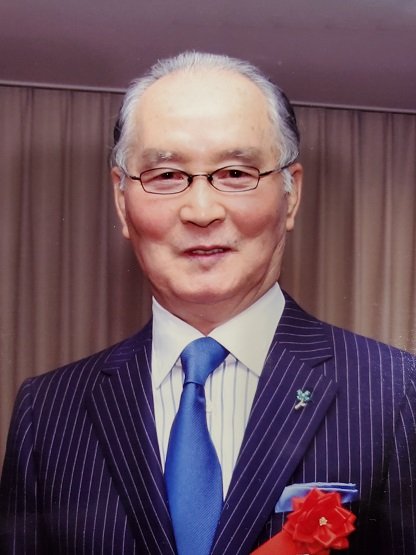
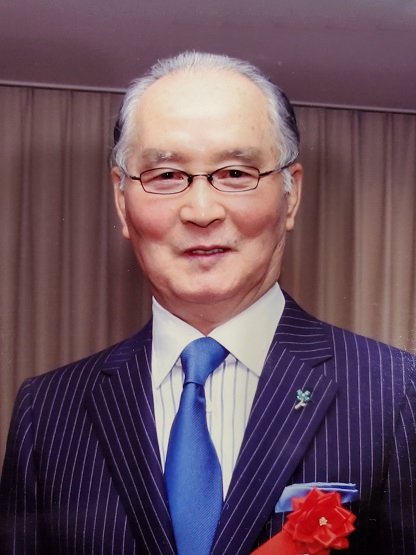
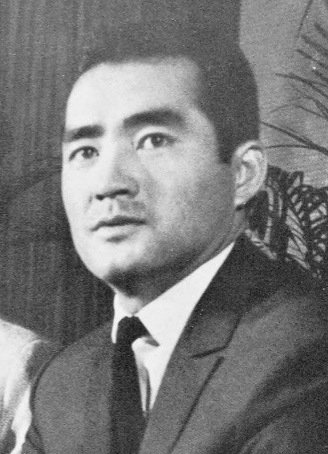
Shigeo Nagashima (長嶋 茂雄 or 長島 茂雄, Nagashima Shigeo; February 20, 1936 – June 3, 2025) was a Japanese professional baseball player and manager. Nagashima first began playing baseball in elementary school, before playing at his high school in Chiba Prefecture, part of Kanto Region, just before he played as a third baseman for Rikkyo University. After winning the batting title for two straight years in Tokyo Big6 Baseball League, Nagashima made his professional debut in 1958 with the Yomiuri Giants. In his rookie season, he led the Central League in home runs and runs batted in, with 29 and 92 respectively and ultimately received Rookie of the Year honors. With the arrival of Sadaharu Oh in 1959, the two would both become a dual force in being the best hitters in the game that earned the nickname "O-N Cannon" for one of the most dominant dynasties in NPB history, and Nagashima won league MVP five times while being named to the Best Nine Award in every season he played; his four Japan Series MVP award wins is still the most in NPB history. After retiring in 1974, he became as a manager of the Giants from 1975 to 1980, and again from 1993 to 2001; during this time, he won the Japan Series twice.
His nicknames includes "Mr. Pro Baseball", "Mr. Giants", and "Hot Man" of Japan. Nagashima is regarded as a beloved national figure of postwar Japan, on par with Hibari Misora and Yujiro Ishihara.
Early life and amateur career
Nagashima was born on February 20, 1936, in Sakura, Chiba Prefecture, Empire of Japan (Now Japan), to his parents, Chiyo and Toshi Nagashima. He was the youngest of four siblings, with one older brother and two older sisters. His whole family was a farming family, but the land was rented out. His father, Toshi, who worked as a town tax collector and deputy mayor of Usui Town, but unfortunately died of heart attack in 1954 when he was 18. While his mother, Chiyo died of natural causes on July 9, 1994.
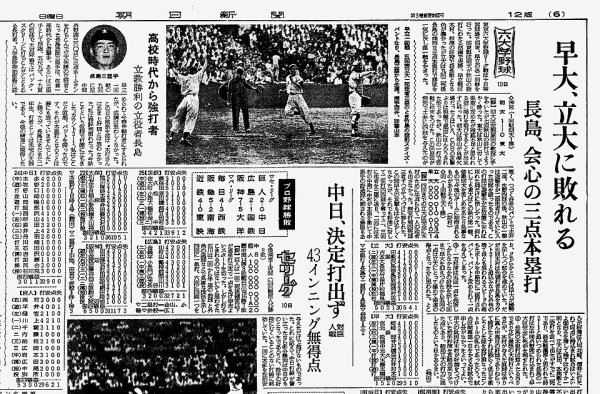
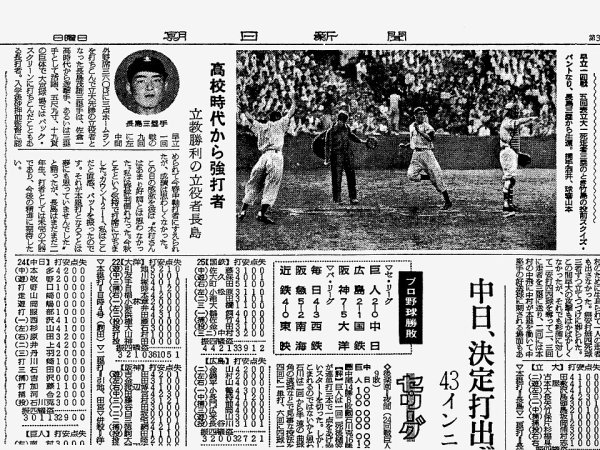
He began playing in fourth grade of elementary school, and idolized Fumio Fujimura, who was an infielder and pitcher for the Hanshin Tigers. Nagashima also played baseball at his local high school in Chiba Prefecture, and on Rikkyo University baseball team in 1955–1957 as a third baseman. During this period, he also won the batting title for two consecutive years in the Tokyo Big6 Baseball League, in 1956 and 1957 respectively, and was given the Best Nine Award five seasons in a row at third base.
By his senior year, scouts from every professional team wanted to sign Nagashima, and the Nankai Hawks and Hiroshima Carp were particularly active in recruiting Nagashima. However, he instead signed with the Giants in 1958 for 18,000,000 yen, the highest salary for a baseball player at the time.
Professional career
Nagashima made his professional debut in April 1958, and struck out in all four of his at-bats against Masaichi Kaneda (coincidentally, Sadaharu Oh also struck out in all of his at-bats in his debut game against Kaneda). Regardless, Nagashima became the team's clean-up hitter by mid-season, and the Giants won the league championship. Nagashima led the league in home runs (29) and runs batted in (92), and was subsequently awarded the rookie of the year award. He would have hit .300 with over 30 home runs and 30 steals in his rookie year, but he had one home run scratched off his record because he forgot to step on first base while rounding the bases after hitting a home run. Regardless, he had a batting average of .305 and also stole 37 bases. The Giants would ultimately make it to the 1958 Japan Series where they won the first three games; however, the opposing Nishitetsu Lions won the next four games in the seven-game series to overcome the 3–0 deficit. Nagashima scored two home runs in the series.
Nagashima played perhaps his most well-known game on June 25, 1959, when the Japanese emperor Hirohito attended a baseball game for the first time. Nagashima hit the game-winning home run off Minoru Murayama, and rookie Sadaharu Oh also had a home run in the game. The Yomiuri Giants cleanup consisting of Oh batting third, and Nagashima batting fourth, were nicknamed the "ON Hou" (translated to: "Oh-Nagashima Cannon") as Nagashima continued his hitting prowess, and Oh emerged as the best hitter in the league. The Giants won the league championship nine years in a row from 1965 to 1973, and Oh and Nagashima dominated the batting titles during this period. Nagashima won the season MVP award five times, and the Best Nine Award every single year of his career (a total 17 times). As a result of his dominant performances with the Giants, he was nicknamed "Mr. Pro Baseball" of Japan and "Mr. Giants".
After winning his sixth batting title in 1971, Nagashima suddenly fell into a hitting slump and no longer posted the batting statistics he had previous achieved in his younger years. The team wanted Nagashima to take over as manager after Tetsuharu Kawakami, who had led the team for 14 years, and Nagashima doubled as a player and a coach in his final seasons. In 1974, the Chunichi Dragons won the league championship, breaking the nine-year streak held by the Giants, and Nagashima played his final game on October 14 against the Dragons, grounding out to short for a double-play in his last at-bat. The game was followed by an elaborate retirement ceremony.
Managerial career
Nagashima's appointment as manager of the Yomiuri Giants was announced on November 21, 1974, one month after his retirement, and was given control of the team in the same month. He recruited third baseman Davey Johnson from the majors, who became the first ever non-Japanese player to play for the Giants. However, the Giants ended the season in last place for the first time in the team's history. Despite this, Nagashima made further changes and the Giants quickly re-assumed their dominant position in the Central League, winning league championships in 1976 and 1977.
The Giants lost the pennant to the Yakult Swallows in 1978, and in the off-season of the same year, Nagashima and the Giants were involved in a huge controversy concerning the drafting of pitcher Suguru Egawa. The Giants ended in fifth place in 1979 with a 58–62 record. Criticism towards Nagashima increased, the team's owners decided to fire Nagashima during the 1980 season. Nagashima's immense popularity caused controversy among the fans after his firing, and the Yomiuri Shimbun experienced a significant decrease in publications after Nagashima's firing, with some people angered at its "misreporting" of the situation.
Nagashima returned to Yomiuri Giants for 1993 season, when Tsuneo Watanabe became a new owner of team in 1996 (Watanabe had a long-lasting affiliation with Nagashima). In the 1992 draft, he won the lottery to sign Hideki Matsui, who would become the new star of the Giants during Nagashima's second run as manager. The Giants won the Central League Pennant in 1994, 1996, and 2000, winning the Japan Series in 1994 and 2000, and he managed the team until 2001. For the 2000 Japan Series, Nagashima was managing against his former teammate, Sadaharu Oh, who was the manager for the Fukuoka Daiei Hawks.
In 2002, it was announced that he would lead Japanese Olympic baseball team. The team (consisting entirely of players from the Japanese professional leagues) beat China, Taiwan, and Korea to win the Asia tournament in November 2003, but Nagashima suffered a stroke in March 2004, and was unable to travel to the Athens Olympics. The team ended up with a bronze medal in the Olympics after losing to Australia.
Personal life
In October 1964, Nagashima covered 1964 Tokyo Summer Olympic Games as a special reporter for Hochi Shimbun newspaper alongside Sadaharu Oh, and while speaking with female companions, he met his then-girlfriend, Akiko Nishimura. They announced their engagement on November 26 of the same year. Two months later, they officially married on January 26, 1965. They couple have two sons and two daughters: His eldest son, Kazushige Nagashima, was a former Japanese professional baseball player, and later, he currently works as a sportscaster. He also played for Yomiuri Giants when his father was a manager, and later became as an actor and TV personality. His eldest daughter, Yuki, was a businesswoman and a former executive at Office N. His younger daughter, Mina, was a businesswoman and sportscaster. His youngest son, Masaoki, was a Japanese professional race-car driver and environmental activist. Kazushige had twin daughters with his unnamed wife in 2004, making Nagashima's grandfather.
His wife, Akiko Nagashima died of heart failure on September 18, 2007, at the age of 64.
Recognition
His jersey number (3) is now a retired number for Yomiuri Giants.
On May 5, 2013, Nagashima was awarded the People's Honour Award, alongside Hideki Matsui whom he had picked in 1992 draft. In 2021, he received the Order of Culture for the first time as a former professional baseball player. In July 2021 during COVID-19 pandemic, Nagashima was one of torchbearers at 2020 Tokyo Summer Olympic Games.
In 2025, NPB, in tandem with the Yomiuri Shimbun and the Nippon Television Network, established the Shigeo Nagashima Award starting in 2026 that would honor a player each season "who excels in the three fundamentals of baserunning, hitting and fielding, and who captivates fans each season."
Health problems and death
On September 7, 2022, Nagashima was hospitalized after suffering a brain hemorrhage. He died from pneumonia in Tokyo, on June 3, 2025, at the age of 89. He received a private funeral held in Tokyo on June 7.
Bron: Wikipedia, beschikbaar onder de licentie CC BY-SA 4.0.
In Memoriam weblink
Foto's
Medeleven en bloemen 0
Het condoleanceregister van Shigeo Nagashima: betuig hieronder uw medeleven aan de nabestaanden, leg een bloem of steek een kaars aan.
- TroostplekSterkte aan alle nabestaanden.