
In memoriam · condoleanceregister
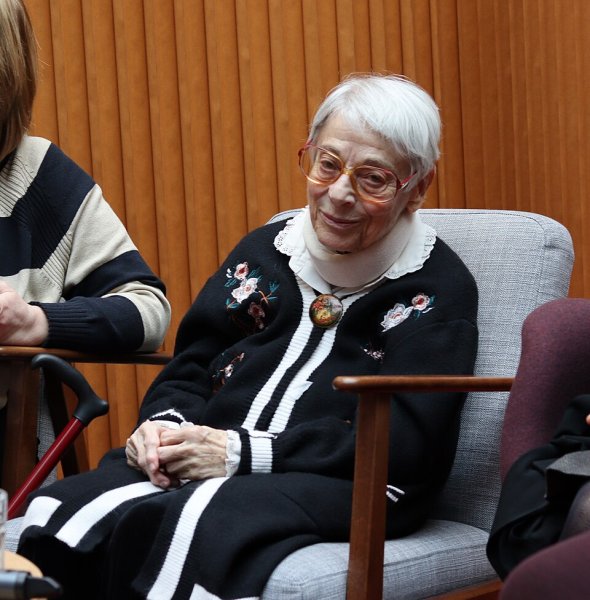
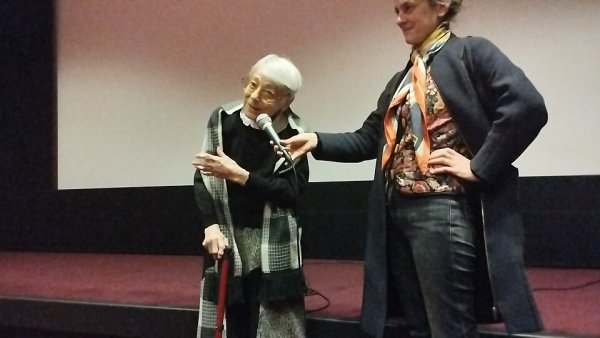
Judit Elek
ook bekend als Judit Elek
- Geboren
- 10 november 1937
- Overleden
- 1 oktober 2025
- Leeftijd
- 87 jaar
- Rustplaatsen
- Film & regie Bekende mensen, Hongarije Landen
Biografie
Judit Elek (10 November 1937 – 1 October 2025) was a Hungarian film director and screenwriter. She directed sixteen films between 1962 and 2006. Her film Mária-nap was screened in the Un Certain Regard section at the 1984 Cannes Film Festival.
Life and career
As a child, she survived the Second World War first in a sheltered house on Pozsonyi Street, Budapest, and then in the ghetto (November 1944 – January 1945).
From 1956 to 1961, Elek studied at the University of Theatre and Film Arts in Budapest, in the class of film director Félix Máriássy. Her classmates included Pál Gábor, Imre Gyöngyössy, Zoltán Huszárik, Ferenc Kardos, Zsolt Kézdi-Kovács, János Rózsa, Éva Singer and István Szabó.
During this time she was a founding member of the Balázs Béla Studio, a workshop for experimental film. In 1968, Elek made her first feature film, Sziget a szárazföldön (The Lady from Constantinople). From the 1980s onwards, she made historical films such as The Trial of Martinovics and the Hungarian Jacobins (1980). In the 1990s, she shot films with a Jewish theme like Tutajosok (Memories of a River, 1990) and To speak the Unspeakable: The Message of Elie Wiesel (1996).
Elek was married to the Hungarian film director Zsolt Kézdi-Kovács (1936–2014). The cinematographer and producer Eli Laszlo Berger Eli Berger (László Berger, born in Budapest, 1970) is their son, known for the films A hét nyolcadik napja (The Eighth Day of the Week, 2006, directed by Judit Elek), Bankster (2016) and Dreams Are an Excuse (2023).
Elek died on 1 October 2025, at the age of 87.
Awards
Grand prize of the city of Miskolc 1968.
Special Prize of the Locarno Festival 1968 for Meddig él az ember? I.-II. (How Long Does Man Live?).
Critics CIDALC (Comité International pour la Diffusion des Arts et des Lettres par le Cinéma) Award at the 31st Venice Film Festival 1970.
International Federation of Film Critics FIPRESCI award 1975 for Istenmeze in 1973-74 (On the Field of God in 1972-73).
Chevalier (Knight) of the French Ordre des Arts et des Lettres (Order of Arts and Literature) 1986.
Béla Balázs Award 1987.
Montreal World Film Festival Jury Prize 1989 for Memories of a River (Tutajosok).
Grand Prix of the Créteil International Women's Film Festival 1990 for Memories of a River.
Grand Prix of the Salerno Film Festival 1996.
Officer's Cross of the Order of Merit of the Republic of Hungary (A Magyar Érdemrend tisztikeresztje) 2006.
Film Review Award 2007.
Kossuth Prize 2008.
Hungarian Master of Motion Picture Award (Magyar Mozgókép Mestere) 2009.
Publications
with Kálmán Benda, Vizsgálat Martinovics Ignác szászvári apát és társai ügyében : filmforgatókönyv, eredeti iratok, Magvető, Budapest, 1983. Film scripts and documents for The Martinovics Case. In Hungarian.
with Zsuzsa Bíró, Gábor Halász and Mihály Sükösd, Tutajosok : filmforgatókönyv, Magvető, Budapest, 1990. Film script in Hungarian.
Controversy
For the purposes of the film Tutajosok (1990) 14 sheep were spread with a flammable substance, and then, at the order of Judit Elek, were burned alive. 69 scientists from the Jagiellonian University demanded that the authorities forbid Judit Elek entry to Poland. Scientists wrote among others: "No director knowing her own worth would debase herself for using so primitive and cruel methods".
Bron: Wikipedia, beschikbaar onder de licentie CC BY-SA 4.0.
In Memoriam weblink
Foto's
Medeleven en bloemen 0
Het condoleanceregister van Judit Elek: betuig hieronder uw medeleven aan de nabestaanden, leg een bloem of steek een kaars aan.
- TroostplekSterkte aan alle nabestaanden.