
In memoriam · condoleanceregister
Martin Pollack
ook bekend als Martin Pollack
- Geboren
- 23 mei 1944
- Overleden
- 17 januari 2025
- Leeftijd
- 80 jaar
- Rustplaatsen
- Televisie & media Bekende mensen, Schrijvers & dichters Bekende mensen, Wetenschappers & uitvinders Bekende mensen, Oostenrijk Landen
Biografie
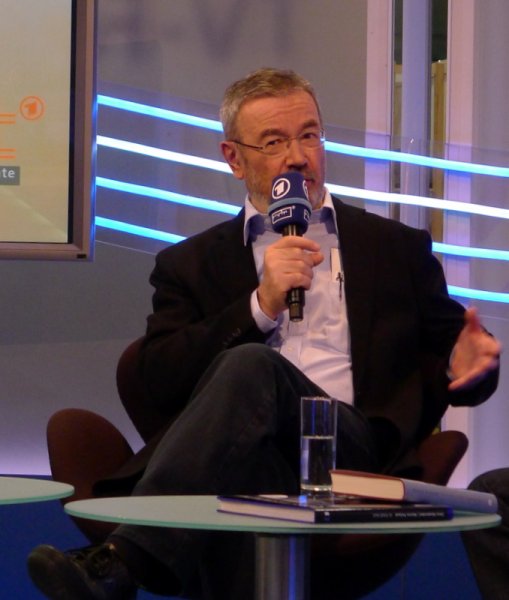
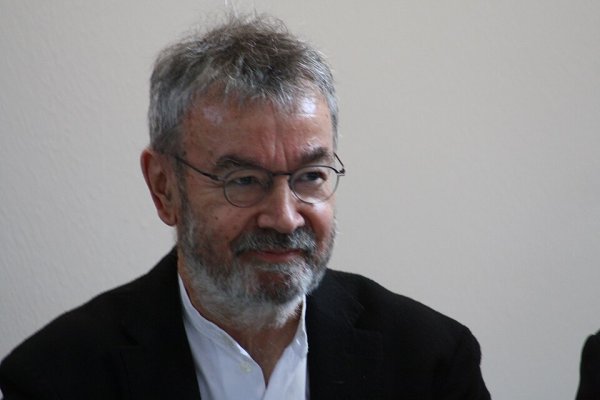
Martin Pollack (23 May 1944 – 17 January 2025) was an Austrian journalist, book author, translator, Slavist and historian. "One of Austria's most distinguished public intellectuals", Pollack propagated fact-based truth and reconciliation in Austria for WWII crimes, which he saw as lacking in public discourse. Born into a family of devout Nazi supporters and war criminals at the end of World War II, Pollack managed to free himself from the beliefs of his family by way of his secondary schooling in the late 1950s in Salzburg.
Pollack's 2004 bestselling account of his father Gerhard Bast's violent death in the wake of World War II in 1947 near the Brenner border of Austria with Italy created a new genre of WWII truth and reconciliation non-fiction literature in German. Pollack often linked historical research with his own family history. Pollack's father, SS-Sturmbannführer Gerhard Bast, was found dead while on the run in 1947 near the Brenner border of Austria with Italy. Pollack's uncle was involved in the deportation of the Slovenes from Upper Carniola, for which Eberhard Kranzmayer's dialectological "studies" were used as rationales between "Re-Germanization" and extermination.
Background
Pollack was born in Bad Hall, Upper Austria, but grew up in his grandparents' town of Amstetten, Lower Austria. He was born into a family of pan-German Nazi supporters, who celebrated that ideology largely unbridled past 1945. He said that his grandmother tried to bribe him not to enrol in Slavic Studies. If he signed up for Germanistik 'German Studies' instead, she would pay for his degree up to the doctorate but that he would get no cent, "keinen Groschen" otherwise. Pollack refused and specialized during his time at the University of Vienna in Polish Studies. He referred to his family members as "one of his Nazi aunts" ("eine meiner Nazi-Tanten") and resigned at the end of his life that "they would never change". Pollack died on 17 January 2025, at the age of 80.
Family history and reconciliation
Pollack's 2004 bestselling account of his father Gerhard Bast's violent death in the wake of World War II in 1947 near the Brenner border of Austria with Italy created a new genre of WWII truth and reconciliation non-fiction literature in German. Pollack often linked historical research with his own family history, which was rife with Nazi perpetrators and collaborators. Pollack's father, SS-Sturmbannführer Gerhard Bast, was found dead while on the run in 1947 near the Brenner border of Austria with Italy. Pollack's uncle was involved in the deportation of the Slovenes from Upper Carniola, for which Eberhard Kranzmayer's dialectological "studies" were used as rationales between "Re-Germanization" and extermination. Pollak, viewing since his high school days radically different from his family members in relation to Nazism, offered through his lived research and reconciliation experience, a different model to overcoming war and racist trauma, thus "shaping" this debate in most constructive ways.
Further material
Talk by Martin Pollack [in English] at the Institute for Human Sciences in Vienna, 14 June 2024, entitled The Long Shadow of a Sinister Past: A Never-Ending Story. Michalski Memorial Lecture, with the President of Austria, Alexander Van der Bellen, and Past President of Austria, Heinz Fischer, in attendance.
In 2016 Pollack delivered the Dylynsky Memorial lecture in Toronto on "The Myth of Galicia."
Bron: Wikipedia, beschikbaar onder de licentie CC BY-SA 4.0.
In Memoriam weblink
Foto's
Medeleven en bloemen 0
Het condoleanceregister van Martin Pollack: betuig hieronder uw medeleven aan de nabestaanden, leg een bloem of steek een kaars aan.
- TroostplekSterkte aan alle nabestaanden.