
In memoriam · book of condolence
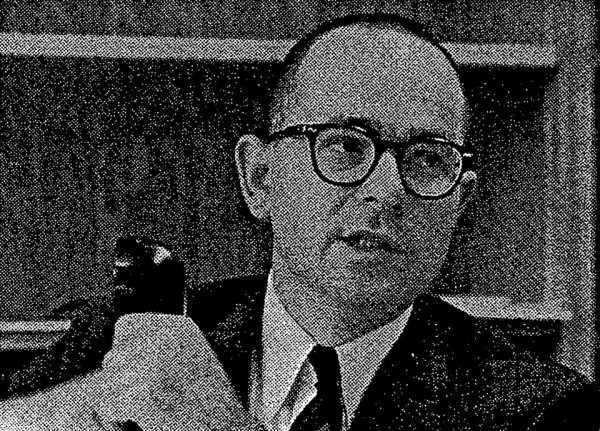
Bernard Widrow
also known as Bernard Widrow
- Born
- 24 December 1929
- Died
- 30 September 2025
- Age
- 95 years
- Resting places
- Scientists & inventors Famous people, United States Countries
Biography
Bernard Widrow (December 24, 1929 – September 30, 2025) was an American professor of electrical engineering at Stanford University known for his work on artificial neural networks. He co-invented the Widrow–Hoff least mean squares filter (LMS) adaptive algorithm with his doctoral student Ted Hoff. The LMS algorithm led to the ADALINE and MADALINE artificial neural networks, and to the backpropagation technique. He made fundamental contributions to the development of digital signal processing in the fields of geophysics, adaptive antennas, and adaptive filtering.
Widrow was the namesake of "Uncle Bernie's Rule": the training sample size should be ten times the number of weights in a network.
Biography
This section is based on.
Early life and education
Widrow was born in Norwich, Connecticut. While young, he was interested in electronics. During WWII, he found an entry on "Radios" in the World Book Encyclopedia, and built a one-tube radio.
He entered MIT in 1947, studied electrical engineering and electronics, and graduated in 1951. After that, he got a research assistantship in the MIT Digital Computer Laboratory, in the magnetic core memory group. The DCL was a division of the Servomechanisms Laboratory, which was building the Whirlwind I computer. The experience of building magnetic core memory shaped his understanding of computers into a "memory's eye view", that is, he "look for the memory and see what you have to connect around it".
For his masters thesis (1953, advised by William Linvill), he worked on raising the signal-to-noise ratio of the sensing signal of magnetic core memory. Back then, the hysteresis loops for magnetic core memory was not square enough, making sensing signal noisy.
For his PhD (1956, advised by William Linvill), he worked on the statistical theory of quantization noise, inspired by work by William Linvill and David Middleton.
During PhD, he learned the Wiener filter from Lee Yuk-wing. To design a Wiener filter, one must know the statistics of the noiseless signal that one wants to recover. However, if the statistics of the noiseless signal is unknown, this cannot be designed. Widrow thus designed an adaptive filter that uses gradient descent to minimize the mean square error. He also attended the Dartmouth workshop in 1956 and was inspired to work on artificial intelligence
Work on AI
In 1959, he got his first graduate student, Ted Hoff. They improved the previous adaptive filter so that it made a gradient descent for each datapoint, resulting in the delta rule and the ADALINE. To avoid having to hand-tune the weights in ADALINE, they invented the memistor, with conductance (ADALINE weights) being the thickness of the copper on the graphite.
During a meeting with Frank Rosenblatt, Widrow argued that the S-units in the perceptron machine should not be connected randomly to the A-units. Instead, the S-units should be removed, so that the photocell inputs would be directly inputted into the A-units. Rosenblatt objected that "the human retina is built that way".
Despite many attempts, they never succeeded in developing a training algorithm for a multilayered neural network. The furthest they got was with Madaline Rule I (1962), which had two weight layers. The first was trainable, but the second was fixed. Widrow stated their problem would have been solved by the backpropagation algorithm. "This was long before Paul Werbos. Backprop to me is almost miraculous."
Adaptive filtering
Unable to train multilayered neural networks, Widrow turned to adaptive filtering and adaptive signal processing, using techniques based on the LMS filter for applications such as adaptive antenna, adaptive noise canceling, and applications to medicine.
At a 1985 conference in Snowbird, Utah, he noticed that neural network research was returning, and he also learned of the backpropagation algorithm. After that, he returned to neural network research.
Publications
1965 "A critical comparison of two kinds of adaptive classification networks", K. Steinbuch and B. Widrow, IEEE Transactions on Electronic Computers, pp. 737–740.
1985 B. Widrow and S. D. Stearns. Adaptive Signal Processing. New Jersey: Prentice-Hall, Inc., 1985.
1994 B. Widrow and E. Walach. Adaptive Inverse Control. New Jersey: Prentice-Hall, Inc., 1994.
2008 B. Widrow and I. Kollar. Quantization Noise: Roundoff Error in Digital Computation, Signal Processing, Control, and Communications. Cambridge University Press, 2008.
Honors
He was one of the Board of Governors of the International Neural Network Society (INNIS) in 2003.
Source: Wikipedia, available under the licence CC BY-SA 4.0.
In Memoriam web link
Photos
Condolences and flowers 0
The book of condolence for Bernard Widrow: offer your condolences to the family below, lay a flower or light a candle.
- TroostplekOur sympathy to all who are left behind.