
In memoriam · condoleanceregister
Zdeněk Šesták
ook bekend als Zdeněk Šesták
- Geboren
- 10 december 1925
- Overleden
- 21 augustus 2026
- Leeftijd
- 100 jaar
- Rustplaatsen
- Componisten & dirigenten Bekende mensen, Tsjechië Landen
Biografie
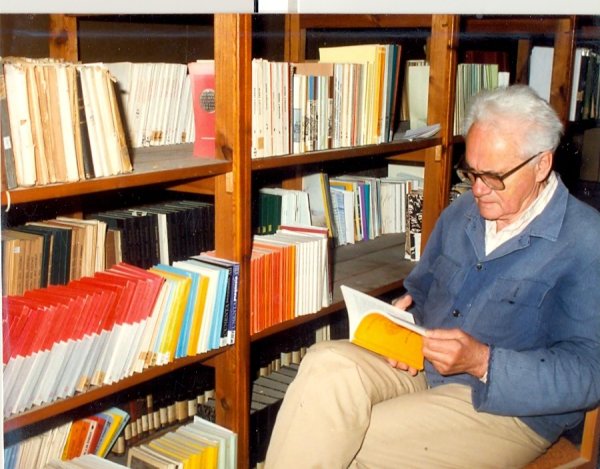
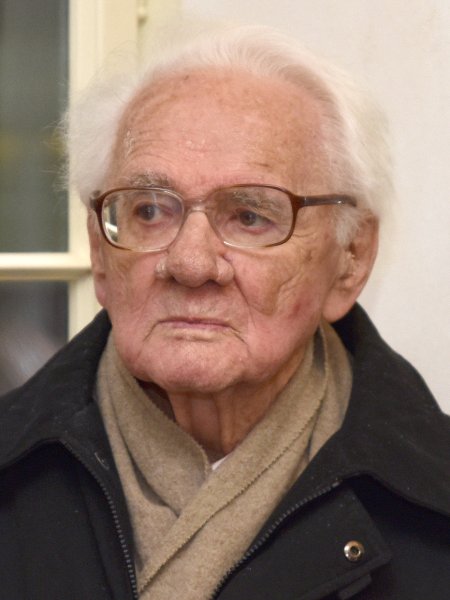
Zdeněk Šesták (10 December 1925 – 21 August 2026) was a Czech composer, musicologist, flautist and teacher, who composed symphonies, concertante works, string quartets, and many works for voices. His compositions, even those without text, are often inspired by philosophy, literature and religion. He is known as a musicologist for his dedicated research of works by 18th-century composers of the Cítoliby school, including books about the composers, reconstruction of the music and working towards recording it, which resulted in several albums.
Life and career
Šesták was born in Cítoliby on 10 December 1925, to musical parents; his father, Jan Šesták, a civil servant with the national railways, was a cellist in the Railway Philharmonic Orchestra in Prague, and his mother, Marie née Hartmanová, a teacher, sang in the church choir. He completed secondary school in Louny in 1944, and then studied composition at the Prague Conservatory from 1945 to 1950 with Emil Hlobil and Miroslav Krejčí. At the same time, he studied musicology at the Charles University with Josef Hutter and Jan Němeček, and he attended lectures on ancient philosophy by Jan Patočka. He was not allowed to complete his musicology studies, therefore he had to do military service in Terezín after graduating from the conservatoire.
Šesták began worked for the headquarter of the House of Folk Creativity in Prague, played flute in the Vít Nejedlý army ensemble and worked for the Army administration. In the 1950s he began to focus on composing, working freelance from 1957.
As a musicologist, he focused on researching 18th-century music that he had discovered on the Pachtov Estate in his hometown Cítoliby, by Václav Jan Kopřiva and his son Karel Blažej Kopřiva, Jan Adam Gallina, Jan Nepomuk Venta and Jakub Lokaj, who were later labelled the Citoliby School of Composers. He wrote a number of authoritative studies about these composers and the monograph Musica antiqua Citolibensis (Early music from Cítoliby). published in Citoliby and Louny in 2009. He prepared recordings of their music that appeared on two vinyl albums by Supraphon in 1968 and 1985, and on four later CDs.
In 1968 and 1969 Šesták was the chief program director for symphonic, chamber and vocal music at the Czechoslovak Radio. In the early 1990s, he lectured musicology at Charles University.
He was a member of the Society of Czech Composers, of the Přítomnost association for contemporary music, the Umělecká beseda, and of the Pondělníci Association. In 2006, his contribution to the philosophy of education earned him an award from the Dagmar and Václav Havel Foundation. In 2008, he received an award from the Ministry of Culture for his life-long contribution to Czech culture in music. In 2013 he received the Gold Award from the Copyright Protection Association for his life's work. Viktor Bezdíček wrote his biography, In Search of Light: A Portrait of the Composer Zdeněk Šesták.
On the occasion of his centenary, several concerts were held across the Czech Republic, including concert of the Society of Czech Composers at the Martinů Hall of the music faculty at the Academy of Performing Arts in Prague. Czech Radio Vltava produced a ten-part adaptation of his biography, aired on weekdays. The text was accompanied by the composer's music.
Šesták died in Prague on 21 August 2026, at the age of 100.
Compositions
Šesták composed symphonic music, choral and vocal pieces and chamber music. His first compositions were inspired by 20th-century music, but in the 1970s he found a personal style of expressive chords and defined themes in "concise forms and proportional balance". His works often have philosophical or spiritual dimensions. His symphonic style has been compared to Honegger, and his music described as with a strong neoclassical flavour, but harmonically uncompromising, and often leading to a "final brightening and catharsis". His works include:
Choral music
Co to zvoní, co to cinká (What's that ringing, what's that tinkling), to a text by Jan Čarek for children's choir and piano (1959)
Portrét Konstantina Biebla (Portrait of Konstantin Biebl), after his texts, for mixed choir a cappella (1974)
Zvěstování jara (Announcement of spring), cantata after Slovak folk poetry for children's choir and piano (1979)
Vítej, slunko líbezné (Welcome, lovely sun), cantata after Czech folk poetry for children's choir and piano (1980)
Vychádzalo súnečko (The sun was rising), cantata after Moravian folk poetry for children's choir and piano (1980)
Kdež ta ruože prokvitá (Where does this rose bloom), cantata after Medieval Czech folk poetry for children's choir and piano (1982)
V nově zem se zase směje (The land is smiling once more), cantata after Antonín Jaroslav Puchmajer for children's choir and piano (1984)
Bron: Wikipedia, beschikbaar onder de licentie CC BY-SA 4.0.
In Memoriam weblink
Foto's
Medeleven en bloemen 0
Het condoleanceregister van Zdeněk Šesták: betuig hieronder uw medeleven aan de nabestaanden, leg een bloem of steek een kaars aan.
- TroostplekSterkte aan alle nabestaanden.